/

Oportunidades Laborales. Centro Interdisciplinario de Neurociencia de Valparaíso, Universidad de Valparaíso

OPORTUNIDAD PARA REALIZAR SU TRABAJO DE TESIS EN NEUROCIENCIA CINV-UV FONDECYT 2021

¿Quiere ser parte de un laboratorio interdisciplinario de Neurociencia?

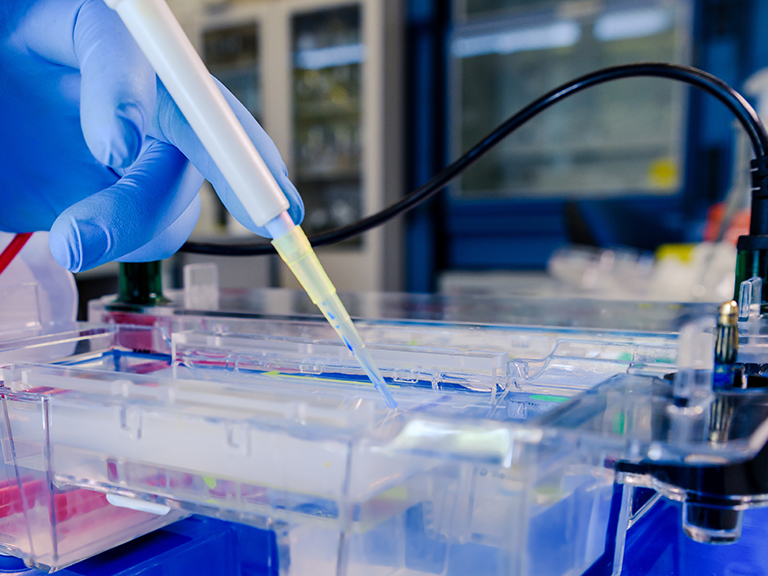
Esta es su oportunidad. Mi laboratorio está interesado en el estudio de la estructura y función del sistema nervioso utilizando tanto el cerebro como la retina como modelo experimental. Estamos estudiando los procesos de codificación sensorial a nivel de la retina, una capa fotosensible que tapiza el fondo del ojo, a través del registro fisiológico simultaneo de cientos de neuronas en respuesta a una diversidad de estímulos visuales

Más Información

OPORTUNIDAD TRABAJO ASISTENTE DE INVESTIGACIÓN CINV-UV FONDECYT 2021

¿Quiere ser parte de un laboratorio interdisciplinario de Neurociencia? Esta es su oportunidad.

El Centro Interdisciplinario de Neurociencia de Valparaíso (cinv.uv.cl), Universidad de Valparaíso, ha abierto un concurso para un cargo de Asistente de Investigación de tiempo completo

Más información
/

Nuevo target para inmunoterapia contra tumores cerebrales malignos

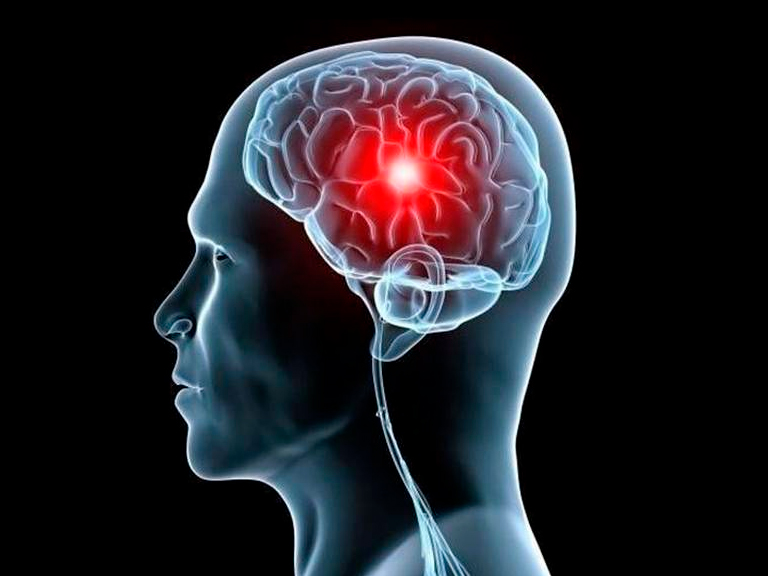
Los científicos dicen que han descubierto un nuevo objetivo potencial para la inmunoterapia de los tumores cerebrales malignos, que hasta ahora se han resistido al innovador tratamiento del cáncer basado en el aprovechamiento del sistema inmunológico del cuerpo. El descubrimiento, publicado en la revista  CELL , surgió de experimentos de laboratorio y no tiene implicaciones inmediatas para el tratamiento de los pacientes.

Ver noticia completa – neurosciencenews.com

//

Postdoctoral Associate – Stanley Center for Psychiatric Research

ABOUT THE BROAD/STANLEY CENTER

Our research teams here are working on redefining the boundaries of science and medicine with an interdisciplinary model designed to meet today’s most critical biomedical challenges. Here you will find a supportive and collaborative intellectual environment and a firm commitment to continuously invest in cuttingedge technology and biology.

The mission of the Stanley Center for Psychiatric Research at the Broad Institute is to discover novel therapeutics to ameliorate the burden of psychiatric disorders. We aim to leverage the significant role of genetics in the pathogenesis of psychiatric diseases as an effective window into their biology and as clues to new therapeutics. The Center has extensive collaborations with investigators, both within the local Harvard and MIT communities and more broadly across the world

OVERALL RESPONSIBILITY

The candidate will work at Pan Lab within the Stanley Center for Psychiatric Research. Their main role will be to implement high throughput automated electrophysiology to characterize the impact of genetic variants on the candidate risk genes associated with psychiatric disorders. The candidate will develop and implement cellular assays and electrophysiological protocols to analyze genetic variants in ion channels and other membrane proteins and dissect the role of such variation in the disease pathogenesis of psychiatric disorders in vitro and in vivo. The researcher will be responsible for communicating results to the scientific community through conference presentations and publications, and within Broad Institute internal communications.

QUALIFICATIONS

  • Ph.D. in Neuroscience, Cell biology or related field with solid training in in vitro electrophysiology and ion channel physiology. Demonstrated technical proficiency in whole-cell patch-clamp recordings and analyses in cultured cells or brain slices.
  • Experience in structure-functional analysis of membrane proteins.
  • Proficient in cell biology, molecular biology, and biochemical assays including protein stability analyses and membrane protein trafficking assays.
  • Experience in ion channel physiology and quantitative analysis, such as ion channel kinetic modeling or single channel analysis is a plus.
  • Proven record of significant contribution to research projects as individual contributor and as a collaborator. Must have outstanding personal initiative and communication skills, and be able to work in a collaborative environment.

The successful candidate will be a results-focused individual able to excel in a fast-paced environment. They must be self-motivated, detail-oriented, and exhibit strong problem-solving skills. In addition, the successful candidate should be a clear and effective communicator, demonstrating strong interpersonal skills to enable collaboration with peers and management within Broad and external institutions.

Interested applicants, please send an email to dbaez@broadinsitute.org, including a CV (no more than three pages) and at least two references.

All qualified applicants will receive consideration for employment without regard to race, color, religion, sex, sexual orientation, gender identity, national origin, disability, or protected veteran status.

More information

/

Neurociencias: los ciclos circadianos y el infarto cerebral

El infarto cerebral es una de las principales causas de muerte y pérdida de capacidad funcional a nivel mundial. En la búsqueda de tratamientos que ayuden a disminuir los efectos a largo plazo de esta enfermedad, un gran problema ha sido la baja capacidad de extrapolar a humanos los resultados positivos obtenidos en ratones. Un grupo de investigadores de la Universidad de Harvard en Estados Unidos descubrió que la diferencia entre los ritmos circadianos de ambas especies puede ser una de las claves para entender esta disyuntiva.

Ver noticia completa – www.elmostrador.cl

/

Postdoctoral fellowship – Johns Hopkins University Center for Hearing and Balance

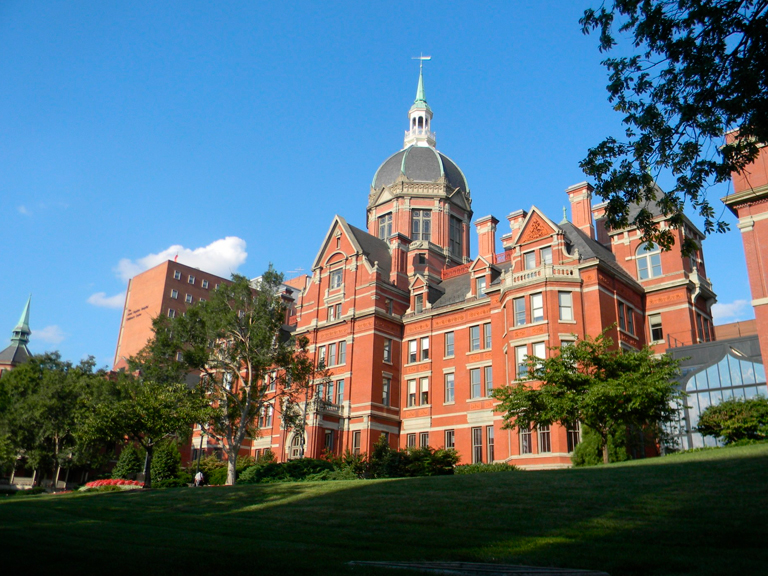
The Glowatzki and Lauer labs have open positions for postdoctoral fellows to investigate the mechanisms of afferent synaptic transmission in the mammalian cochlea and the role of the olivocochlear efferent system on auditory nerve fiber activity. Secondly, effects of abnormal acoustic experience on afferent and efferent activity are investigated, to gain insights into possible approaches to prevent hearing loss. Projects are ongoing in the areas of environmental sound experience and aging.

The Glowatzki and Lauer labs collaborate closely to implement an array of techniques to investigate peripheral and central components of the olivocochlear circuit, including electrophysiology in mouse models (evoked potentials, cellular physiology/patch clamp, optogenetic stimulation, calcium imaging), anatomy (immunohistochemistry, confocal and electron microscopy), and behavior (acoustic startle, operant conditioning, noise avoidance, etc.). We also integrate optogenetic and chemogenetic manipulations into functional studies of the olivocochlear system. The ideal candidates will have experience in one or more of these techniques and a working knowledge of the auditory system.

In addition to experimental techniques, postdocs will receive training in dissemination of research, grant writing, research integrity, managing collaborations, and other aspects relevant to professional development. Postdoctoral fellows receive a stipend and benefits consistent with current NIH guidelines and university policies. Applicants should have a Ph.D. or equivalent degree in neuroscience, biology, biopsychology, or related field. Initial appointment will be for one year with possible extension based on performance and availability of funding. Postdocs are part of our large and highly collaborative Center for Hearing and Balance, comprised of members from Otolaryngology-HNS, Neuroscience, Biomedical Engineering, and Psychological and Brain Science departments.

Interested candidates should submit a CV and cover letter to Amanda Lauer alauer2@jhmi.edu and Elisabeth Glowatzki eglowat1@jhmi.edu. For more information about the labs, the center, and postdoctoral affairs at Johns Hopkins, please visit: www.lauerlab.com

https://glowatzkilab.com/
https://neuroscience.jhu.edu/research/faculty/32
http://jhu-chb.org/

View PDF

/

Séptima Escuela Internacional de verano sobre envejecimiento

La pandemia por COVID-19, el confinamiento y desigualdad multidimensional que existe en Chile son factores que golpean a toda la población, no obstante, uno de los grupos más afectados por esta situación son las personas mayores. Esto debido a las problemáticas específicas que vivencia este grupo etario como la discriminación, la vulneración de sus derechos, la desigualdad y la poca concurrecia del Estado para palear estas situaciones.

Ver noticia completa – redesvid.uchile.cl